

A tiny chip can be surprisingly hard to ignore. Maybe you notice it only in photographs. Then you catch it in the mirror. Soon, your eye goes straight to that one tooth every time you smile.
The solution, however, does not always require porcelain or extensive dental work. Dental bonding in New York can provide a conservative way to repair certain cosmetic imperfections using tooth-colored composite resin. The important question is whether bonding suits the tooth, your bite, and the change you want to make.
What Is Dental Bonding?
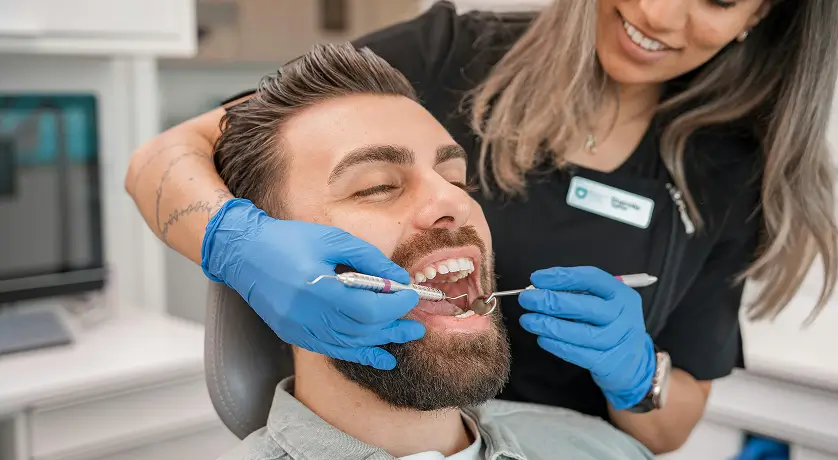
Dental bonding involves placing tooth-colored composite resin directly onto a tooth. The dentist shapes the material, hardens it with a curing light, and carefully polishes the surface.
Bonding may help correct small chips, minor gaps, uneven contours, discoloration, or slightly short teeth. Rather than automatically covering the entire tooth, resin can often be added only where needed. Careful, precise color matching helps the restoration blend with nearby enamel.
Why Choose Our Grand Central Team for Dental Bonding in NYC?
Cosmetic bonding involves more than selecting white material and placing it on a tooth. Shape, translucency, surface texture, proportions, and bite all influence the result.
Our Grand Central dental team combines cosmetic planning with careful shade assessment and attention to function. The practice’s dentists have more than 30 years of combined experience, including expertise in cosmetic dentistry, prosthodontics, and composite restorations.
Many straightforward cases can also be completed in a single appointment, although treatment time depends on how many teeth require attention.
Benefits of Dental Bonding & Who It’s Right For
Bonding can be appealing because treatment usually preserves more of the natural tooth structure than procedures that require substantial tooth preparation. It is also useful when the desired change is relatively small.
A dentist may consider bonding for:
- A small chip or minor crack
- Narrow spaces between teeth
- An irregular or worn edge
- Localized discoloration
- A tooth that appears short or uneven
- Subtle changes in tooth shape
There is no standard number of teeth that should be bonded. One person may need a single repair, while another may want several visible teeth balanced as part of broader cosmetic dentistry planning.
Active decay, significant structural damage, certain bite problems, or extensive cosmetic goals may make another treatment more appropriate.
The Dental Bonding Procedure: What to Expect
Treatment generally follows a straightforward sequence:
- Shade selection: Composite is chosen to coordinate with surrounding enamel.
- Tooth preparation: The surface is conditioned to improve material adhesion.
- Composite placement: Resin is applied and sculpted into the planned contour.
- Curing: A dental curing light hardens the material.
- Finishing: The dentist refines the shape, checks your bite, and polishes the restoration.
According to Cleveland Clinic, treatment commonly takes about 30 to 60 minutes per tooth. Anesthesia may not be necessary when bonding is performed solely for a minor cosmetic change, although individual circumstances vary.
How Much Does Dental Bonding Cost in NYC?
There is no single responsible price for teeth bonding in New York without first evaluating the tooth.
Fees vary based on the number of teeth, the amount of composite required, the complexity of reshaping, repair needs, and whether additional treatment is necessary. A full cosmetic case naturally costs more than repairing one small edge.
General pricing found online may differ from your actual cost. Your dentist can provide an individualized estimate after assessing your teeth and treatment needs.
Insurance may cover composite treatment when necessary to restore a damaged tooth, but cosmetic-only procedures are commonly excluded. Review your individual benefits and available dental insurance and financing options before treatment.
How Long Does Dental Bonding Last?
Composite is durable, but it is not permanent. Cleveland Clinic reports that bonded material typically lasts around three to 10 years before touch-ups or replacement may become necessary.
Bonding durability varies from person to person and depends on factors such as tooth location, biting forces, dental hygiene, and personal habits.
To protect bonded areas:
- Brush twice daily with fluoride toothpaste.
- Clean between teeth every day.
- Do not chew ice, pens, or other hard objects.
- Never use bonded teeth to open packaging.
- Ask about a night guard if grinding or clenching is a concern.
- Attend recommended dental examinations.
Composite can also stain more readily than porcelain, making routine maintenance important.
Dental Bonding vs. Veneers vs. Crowns
These treatments solve different problems.
Bonding generally requires less alteration of natural enamel and can be useful for modest cosmetic corrections. Porcelain veneers fit over the front surface of teeth and may be considered when patients want broader cosmetic improvements with a material that resists stains well.
Dental crowns, meanwhile, surround much more of the visible tooth and are commonly considered when substantial structural support or restoration is needed.
So, is bonding “better”? Not universally. The appropriate choice depends on the condition of the teeth, cosmetic goals, bite, expected longevity, and budget.
Pros and Cons of Dental Bonding
Potential Advantages
Bonding can conserve tooth structure, often requires only one visit, is repairable, and may cost less than porcelain alternatives.
Possible Limitations
Composite may stain, wear, or chip with time. It also may not be suitable for extensive damage or major changes in tooth position.
Bonding itself does not make a tooth immune to tooth decay. Natural tooth structure still requires consistent brushing, interdental cleaning, and professional care.
Schedule Your Dental Bonding Consultation
Considering dental bonding in New York for a chip, gap, or uneven tooth? Schedule an evaluation with Rockefeller Cosmetic Dentistry in Grand Central to discuss whether composite bonding fits your smile, oral health, and treatment goals.
Frequently Asked Questions
It can be worthwhile when you want a conservative correction for a small cosmetic concern. A dentist should first confirm that composite is suitable for the tooth and your bite.
Usually, normal activities can resume after treatment. Follow your dentist's specific instructions, and avoid biting very hard objects that could chip the composite.
Properly planned bonding should be shaped so your teeth meet comfortably. It does not orthodontically move teeth. Your dentist checks the bite after placement and adjusts high areas when necessary.
That is the goal. Shade selection, translucency, contour, surface texture, and polishing all influence how well composite integrates visually with surrounding enamel.
Depending on the concern, alternatives may include veneers, crowns, orthodontic treatment, whitening, or a combination of procedures. An examination helps determine which approach fits the clinical situation.
Medical References
- Cleveland Clinic. Dental Bonding: What Is It, Procedure & What To Expect.
- Cleveland Clinic. Chipped Tooth: Causes, Symptoms & Repair.
- American Dental Association. Materials for Direct Restorations.
- American Dental Association. Dental Curing Lights.